
 By
By 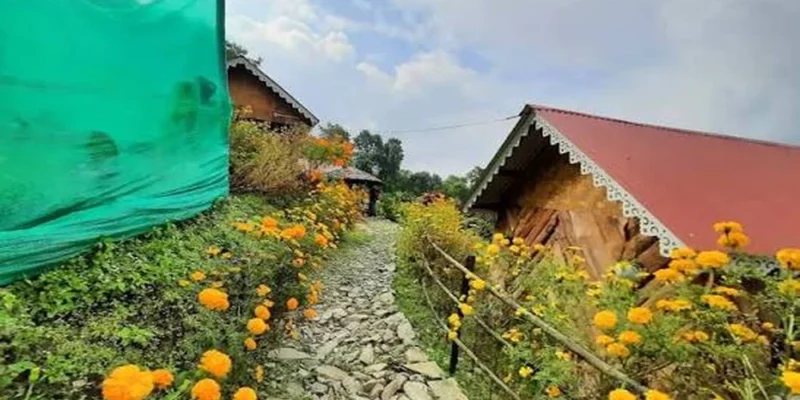
The best meal I have had in Sikkim did not come from a restaurant. It was a plate of rice, dal, foraged fern tips, and a fiery pork curry, cooked over a wood stove by my host in a village outside Ravangla, from vegetables pulled out of the garden an hour before. That is the whole point of farm stays in Sikkim. You trade the hotel breakfast buffet for a working Himalayan farm, and the trip slows down to the pace of the place.
Sikkim became India’s first fully organic state in 2016, so every farm you stay on grows its food without chemical fertiliser or pesticide, by law and by long habit. Add cardamom slopes, kitchen gardens, and hosts who have worked these hills for generations, and a farm stay becomes the most honest way to see rural Sikkim. Here is how they work, what they cost, where to find the good ones, and when to go.
What a farm stay in Sikkim actually involves
This is not a hotel with a garden. You get a room in or beside a family home on a working farm, and meals are almost always included. How involved you get is up to you. You can pick cardamom, help weed the vegetable plot, learn to fold sel roti or ferment gundruk, forage the wild fern tips they call ningro, or watch churpi, the hard local cheese, being made. Or you can sit on the porch with a cup of tea and do nothing at all, which is a fine choice too.
The food is the part people remember. Expect dal and rice, phagshapa (pork cooked with radish), fermented greens like gundruk and sinki, fresh sel roti, and local cheese, often finished with a pot of tongba, the warm millet beer you sip through a bamboo straw by the fire.
The cardamom connection
Large cardamom, bhado elaichi, is Sikkim’s signature crop, and the state is India’s biggest producer of it. Many farm stays sit right on cardamom holdings, the plants growing in the shade of alder trees on the slopes. If you come in the harvest window, roughly August to October, you can watch the pods being dried over slow wood fires, and the whole hillside carries that warm, smoky, faintly resinous smell. It is one of those small things that stays with you long after the trip.
Where to find the best farm stays in Sikkim
- Kewzing, in the south near Ravangla, runs a well-organised village homestay network, with the Bon monastery close by.
- Dzongu, in the north, is a protected Lepcha reserve of cardamom farms and river valleys. It needs a special permit arranged in advance, and in return you get some of the most traditional, least touristed farm life in the state.
- Yuksom, in the west, is the starting point for the Goecha La trek and has farm stays set among orchards and gardens.
- Pastanga, in the east near Gangtok, is a community tourism village with good forest walks straight from the door.
- Rinchenpong and the Bermiok-Labdang area in the west are quieter, with terraced farms and long valley views.
- Rhenock and Martam, in the east, are gentle, lower-altitude options that pair easily with a Gangtok trip.
Why a farm stay beats a hotel here
A hotel in Sikkim gives you a bed and a view, and often that is enough. A farm stay gives you the thing you actually came for, which is the place itself, seen from the inside. You eat what the family eats, you learn how the food gets to the plate, and you hear the stories that never make it into a guidebook. Because the money goes straight to the household, your stay also does more good than a night in a chain hotel would. For a first trip to Sikkim the towns are fine, but for a second or a slower one, a couple of nights on a farm is what people tend to remember most.
What it costs
Most farm stays run between 700 and 3,500 rupees a night, and that usually includes three home-cooked meals. It is cheaper than any comparable hotel, and the money goes straight to the family rather than a chain. Carry cash, since card machines are rare in the villages, and do not expect to pay online everywhere.
Best time for a farm stay
Spring, March to May, has the gardens waking up and mild days good for village walks. Autumn, October and November, is my pick: clear skies, harvest underway, cardamom drying, and festivals in the villages. The monsoon, June to September, is lush and cheap but comes with leeches, damp, and the odd slipped road, so it suits only those who do not mind mud. Winter is cold at altitude and the crops are thin, but sitting by the wood stove with a bowl of thukpa has its own reward.
A few honest tips
- Book through the village committee or a registered operator rather than a stray online listing. Dzongu in particular needs its permit sorted before you arrive.
- Set your expectations right. Bathrooms can be basic, hot water is often bucket-heated, and the wifi is patchy at best. That is the trade for the real thing.
- Pack layers, a torch, cash, and any medicines you need. The nearest shop can be a long way off.
- Eat what you are given. The fermented greens take some getting used to, but learning to like them is half the point of coming.
Farm stays in Sikkim FAQ
What is a farm stay in Sikkim like?
A room on a working family farm, meals included, with the option to join in the farming, cooking, and foraging or simply relax. Food is home-cooked and organic.
How much does a farm stay in Sikkim cost?
Usually 700 to 3,500 rupees a night, generally including three meals. It is cheaper than a comparable hotel and supports the family directly.
Which is the best village for a farm stay?
Kewzing and Dzongu are strong choices, Kewzing for its organised network near Ravangla and Dzongu for the most traditional Lepcha farm life, though Dzongu needs a permit.
Do farm stays include meals?
Almost always. The home-cooked meals, made from farm-fresh and foraged produce, are one of the main reasons to choose a farm stay.
Do you need a permit for a farm stay in Sikkim?
Not for most villages. Dzongu is the exception, as a protected Lepcha reserve it needs a special permit arranged ahead of time.
Matching the right village to the season, sorting the Dzongu permit, and getting to farms that are genuinely off the main road all go easier with local help. There is more on planning a slow Sikkim trip over at sikkimtourism.org, a Sikkim-based team who know the villages, the hosts, and the seasons first hand.




Comments